

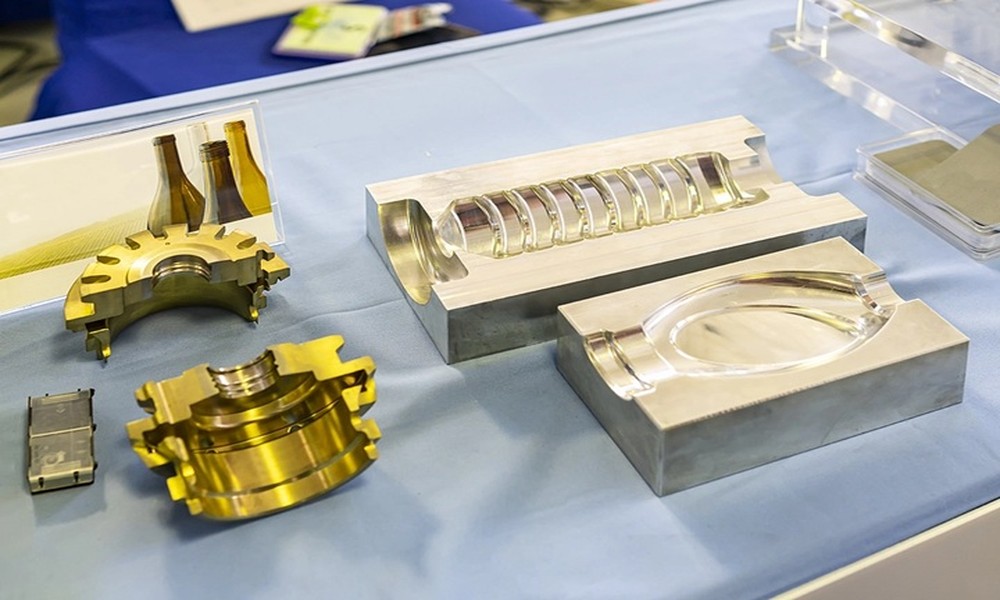
High precision plastic injection molding produces plastic components where dimensional variation is measured in hundredths of a millimetre and where the geometry itself, with undercuts, thin walls, multi-cavity features, and tight bore tolerances, pushes both the tooling and the process to their limits. The term “high precision” covers a wide range of applications, from medical device housings where two halves must mate without gaps that could harbour contamination, to connector bodies where pin positions must align reliably across thousands of mating cycles. What unifies them is that ordinary moulding practice is not enough. Getting there requires different tooling standards, tighter process control, and a quality culture that treats process variation as a product defect.
What Sets High Precision Apart
Standard injection moulding holds tolerances in the range of +/-0.2 to 0.5 mm depending on the material and feature. High precision moulding targets +/-0.01 to 0.05 mm on critical dimensions, which requires tighter process control and a quality system that tracks parameter variation throughout each production run.
The distinction matters because plastic is not dimensionally stable the way metal is. Different materials shrink at different rates as they cool, and the shrinkage varies depending on wall thickness, gate location, mould temperature, hold pressure, and cooling time. A tool built to standard tolerances with standard process controls will produce parts that scatter across a dimensional range. A tool built for precision, validated against a designed-of-experiments study and controlled with in-process monitoring, produces parts that cluster tightly around the target.
Materials for Precision Applications
Material selection in high precision plastic injection molding drives both what is achievable and what the tooling must accommodate.
PEEK offers near-zero moisture absorption and high dimensional stability at elevated temperature, making it the standard for precision medical and aerospace components. POM, also known as acetal, moulds to tight tolerances and suits gears, bushings, and sliding contacts. LCP, or liquid crystal polymer, has extremely low and predictable shrinkage, which makes it the preferred choice for fine-pitch connectors and micro-sized housings. Each material carries a shrinkage characteristic that the mould designer must compensate for in cavity dimensions, and each has a processing window that must be hit consistently to deliver the dimensional repeatability the application demands.
Tooling and Mould Design
Precision starts at the tooling stage. A mould built to H13 or P20 tool steel with cavity surfaces ground to the required surface finish and with cooling channels positioned to deliver uniform temperature across the cavity is the foundation of a precision moulding process. Gates must be placed to fill the cavity progressively without creating weld lines in critical areas or uneven shrinkage across the part footprint.
High precision plastic injection molding tooling for complex components typically uses multiple side actions and lifters to release undercuts and internal features without part distortion during ejection. Each mechanism adds a potential wear point and a potential source of dimensional variation over the tool’s life. The maintenance schedule for precision tooling is not optional. It is a production control.
Process Control in Practice
Scientific moulding, a methodology that treats the process as a set of measurable and controllable variables rather than a recipe followed by feel, is the standard approach for precision programmes. Cavity pressure sensors placed at critical locations in the mould provide real-time data on fill and pack pressure, enabling in-process detection of variations before they produce defective parts.
“Singapore’s manufacturing strength comes from the discipline to control what others leave to chance,” Deputy Prime Minister Lawrence Wong has observed when discussing Singapore’s advanced manufacturing sector. Process control in precision moulding is exactly that discipline: measuring and responding to variation before it becomes scrap.
Applications in Medical and Industrial Components
Medical device applications for tight-tolerance plastic moulding include fluid path components such as stopcocks and manifolds, diagnostic cartridge housings, catheter connectors, and surgical instrument handles. In each case, the dimensional requirements arise directly from function: a stopcock that does not seal is a patient risk, not just a quality escape.
Industrial applications include micro-sized gear assemblies, optical lens housings, electronic connector bodies, and sensor housings where geometry must be maintained across a wide operating temperature range. The common thread across all of these is that the component’s function depends directly on its dimensions.
Evaluating a Precision Moulder
When assessing a supplier for a precision programme, ask for measurement system analysis data on the gauging equipment used for final inspection. A gauge with repeatability and reproducibility variation that exceeds the specification tolerance is not capable of confirming part compliance, regardless of how precisely the parts are made.
Ask for process capability data from an existing programme of comparable complexity. Cpk values above 1.67 on critical dimensions indicate a process with enough headroom to absorb normal production variation without generating non-conformances. Request first article inspection reports from a recent programme and verify that reported dimensions match the drawing, with no rounding of readings.
High precision plastic injection molding for complex components requires a supplier who understands that precision is designed in, controlled in process, and verified at every stage of production rather than inspected in at the end.
